
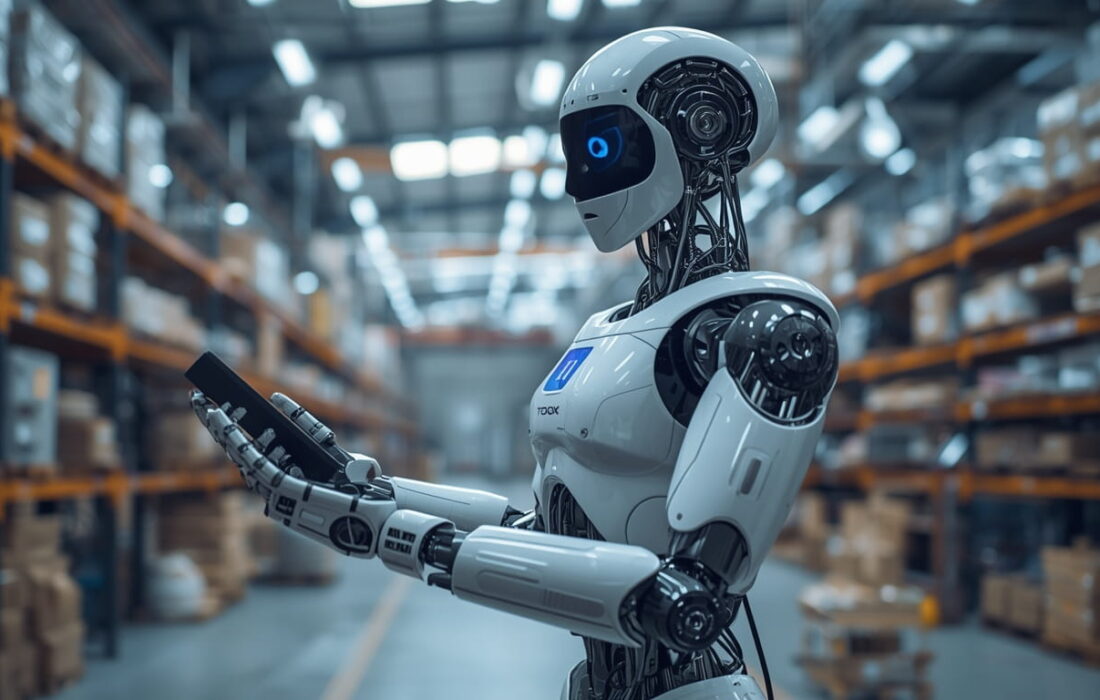
At warehouses, factories and research labs around the world, a subtle shift is occurring. Humanoid robots that move, work, and interact as humans have moved past the experimental prototype and viral demonstration video stage and into becoming real, money-making tools. The era of humanoid robotics has finally arrived, as big companies are now taking humanoids out of the lab and into the real world with a number of such robots and are even starting to make limited consumer deliveries.
This milestone is not only a step in technology but also a leap in efficiency and streamlining. It represents a paradigm shift in human-machine relations that will be felt profoundly over the next ten years and will have implications for the job market, industry, health care and everyday life.
A Journey from Laboratories to Production Lines
Humanoid robots were limited to research labs, where they could execute impressively sophisticated tasks with carefully controlled programming for years. It was hard to get a balance, difficult to be dexterous, and costly. But, with the advent of super-fast Artificial Intelligence, sensor technology and actuator design, the scenario has dramatically shifted.
The top manufacturers are now putting into production models that can do something useful without much human supervision. Pilot runs in vehicles, electronics assembly factories, and logistics centres have yielded good results. What used to be a problem of getting walking robots to move around in a simple manner is now the ability to guide them through a cluttered environment, pick up delicate items, and even work safely alongside human workers.
Many of the companies involved in the development of major technology and traditional manufacturers are investing heavily in this new category of machines. They have already paid off in early deployments in factories, with some even dedicating their 2026 production to industrial customers. This is a strong demand, driven by companies seeking to address manpower shortages and increase productivity in ways that conventional automation can’t replicate.
Advances Supporting the Humanoid Revolution
There have been a few key technological developments that have enabled commercialisation. Today, highly complex vision systems are available that enable modern humanoid robots to understand complex scenes in real-time. Their hands are equipped with sophisticated sensors that can provide tactile feedback, for example, allowing them to handle delicate objects without crushing them. Advances in battery technology and efficient electric actuators have increased the endurance of these robots, allowing them to work for several hours without recharging.
The most significant aspect is that these robots now feature very powerful AI models, enabling greater autonomy. Instead of being programmed for each individual movement, many now use learning-based techniques that enable them to adapt to new tasks through modelling or instruction. This is an AI that is becoming essential for effective operation within most workplaces, which is unstructured and unpredictable.
The arrival of practical humanoid robots is a critical moment for the industry worldwide. Many developed countries have faced labour shortages in manufacturing, warehousing and elderly care, due to ageing populations. Humanoid robots are not seen as a way to replace human workers, but rather as a valuable tool for companies to complement their teams and handle repetitive or physically demanding tasks.
The early-stage economic analysis of these robots indicates they can significantly reduce operational costs and boost output when scaled up. For some jobs, the returns for a single humanoid working 20 hours a day with little downtime are very promising compared with conventional automation or human operators. It is highly desirable in situations with high mix and low volume, where flexibility is critical to manufacturing.
In addition to factories, early prototypes of consumer-oriented humanoids are also being developed. Some companies have begun accepting pre-orders for home assistance models that can assist with housework, basic care, and support for the elderly. These types of home robots are still costly, but they will likely become cheaper as production grows rapidly.
Although there have been great strides, there are still obstacles to be overcome. Safety is always the top priority, particularly when robots are used near human beings. Reliable performance in an unpredictable world remains a challenge for engineers. The rules and regulations governing autonomous robots are still under development, and issues of responsibility, insurance, and ethics are hot topics.
Energy consumption is also a worry. As more sophisticated robots are implemented, a significant amount of electricity is required to train and operate them, raising sustainability concerns as robots are scaled up. In addition, the upfront cost of the machines is high, and only large enterprises can currently afford them, potentially creating a divide between large corporations and smaller businesses.
As humanoid robots become more integrated into society, experts say care must be taken in their implementation. Most companies are not looking to eliminate jobs but rather to create them and replace the work with something that is dangerous, boring, or dirty. This transition could free up human workers to work on more value-added, creative and interpersonal tasks.
The coming years will be crucial. As with traditional robot arms, humanoid robots might become as ubiquitous in industrial environments as they are today. There will be versions for consumers that will be helpful around the world, in homes, too.
As for 2026, it is expected to be an era of the introduction of humanoid robots into reality. Science fiction is no longer a thing of the future, but it now walks the factory floor and is ready to walk into the lives of people. The robots are here, and they’re not going anywhere!