
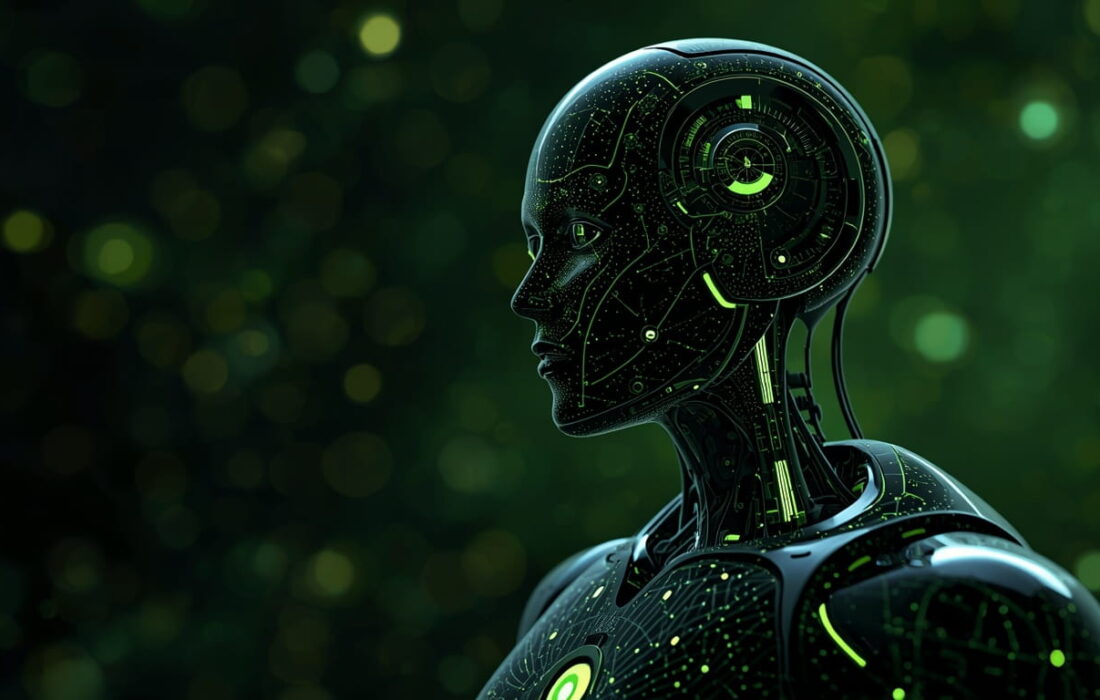
With a bold step forward in the digital-physical convergence of AI, Nvidia has unveiled the Cosmos, an open platform with world foundation models to train robots and autonomous systems in a way never before possible. The tech was introduced at CES 2026 in Las Vegas and represents a landmark leap from screen-based AIs to “physical AIs,” which will understand physics, space, and dynamics with human-like perception and the ability to act.
The leap will cut the time needed to build humanoid robots, self-driving cars, and robotics for manufacturing, and enable more efficient machines that can learn from simulated video data rather than costly real-world trials.
Announced by Nvidia’s CEO, Jensen Huang, at the company’s keynote, Cosmos is the base system for the “ChatGPT moment” in robotics, as more and more people are referring to it. While most AI systems are based on a single image or a collection of text, Cosmos uses a very large amount of data extracted from real-world videos to produce predictive simulations. Such world models can predict the movement, interactions, and reactions of objects to physical forces, enabling robots to simulate and practice complex tasks with thousands of iterations without interacting with the real-world prototype.
Several open-source components of the platform are released simultaneously to expedite industry adoption. From basic text instructions or an existing video, developers can generate an unlimited amount of training data that adheres to real-world physics laws using Cosmos Transfer and Cosmos Predict.
Finally, Cosmos Reason provides AI agents with strong spatio-temporal reasoning abilities, allowing them to comprehend conditions not only from what they see but also from how they evolve over time and space. To equip humanoid robots with full-body control, Nvidia has now created a vision-language-action model, called Isaac GR00T N1.6, based on Cosmos. To give robots full-body control, Nvidia has now developed a vision-language-action model, called Isaac GR00T N1.6, based on Cosmos.
At CES, early prototypes were unveiled that could navigate to locate items in a crowded warehouse, do intricate surgery or even work alongside people in an active environment. For instance, one of the partners reported that they reduced incident resolution times and costs by 50% by employing Cosmos technology to analyse video feeds from the factory floor. The platform’s physics-aware simulations are being used to train other medical robotics companies to teach their autonomous surgical arms to perform procedures faster and more safely.
The platform also features an open simulation framework, Isaac Lab-Arena, for rigorous testing, and the new edge-to-cloud computing system OSMO to simplify training workflows from any data centre to on-device processors. Nvidia’s plan is to give these tools away on platforms such as Hugging Face, allowing phytonic researchers to build physical AI without having to pay a price.NVIDIA is hoping to bring physical AI to the masses as they did with Android decades ago, by making these tools freely accessible to any Python researcher.
Transforming the Future of Industry and Everyday Life
The implications are far-reaching, beyond research labs. The factories would have fleets of versatile humanoid robots that could learn new assembly tasks overnight with minimal programming. Logistics firms dream of driverless trucks and robots in warehouses that can navigate around obstacles and work out the best route in real time, without causing accidents, and improve efficiency. Surgical robots with a deeper understanding of context have the potential to reduce error rates in operating rooms worldwide and boost the healthcare industry.
It’s also really exciting stuff for consumer use. Consider natural movements learned by billions of simulated hours that make household robots cook, clean and help grandma get ready. This autonomous mobility could accelerate the introduction of safer robotaxis and personal transport pods into cities. Even the most creative sectors, such as film and games, could benefit from Cosmos-generated worlds for prototyping full virtual environments, under the control of real physics.
According to industry experts, real-world testing and limited access to high-quality real-world data have been the major challenges in the field of physical AI so far. Both challenges are directly addressed by Cosmos, which transforms pixels into physics-accurate, scalable synthetic data. NVIDIA’s partnerships with the world’s leading players in robotics, automotive and healthcare indicate that the technology is well-suited for fast commercialisation, with a number of significant deployments already in the pilot stage.
Overcoming Remaining Hurdles
The launch is an important step, but a complete lack of autonomy in the unpredictable environment is still a long way off, experts warn. Human supervision is needed for edge cases in current models, and with a high concentration of people in public areas, a strong regulatory framework will be necessary. The energy efficiency of onboard processing and the ethical considerations of job losses in manual labour sectors will also have to be carefully addressed.
By controlling the development of these models, Nvidia has been playing a responsible role, releasing guardrails and evaluation tools alongside the models. Open collaboration is the company’s strategy to drive improvements based on community, which has helped propel the development of open-source software and, in turn, that of cloud computing.
As the world grapples with a shortage of human workers and the need for resilience in supply chains, Nvidia’s Cosmos platform comes to the fore. The company’s software “brain” is enabling machines to truly understand and interact with the physical world, creating an environment where AI is not just on screens but a real partner in human progress.
It’s from this initial research into world models that exciting tools are now emerging, both in production and already being adopted by leading organisations. The digital and physical divide will further fade as deployments grow in size throughout 2026 and beyond. This CES 2026 preview is not just about a new product, but a new generation of machines that are truly intelligent – and ready to enter our world as engineers, businesses and consumers.