
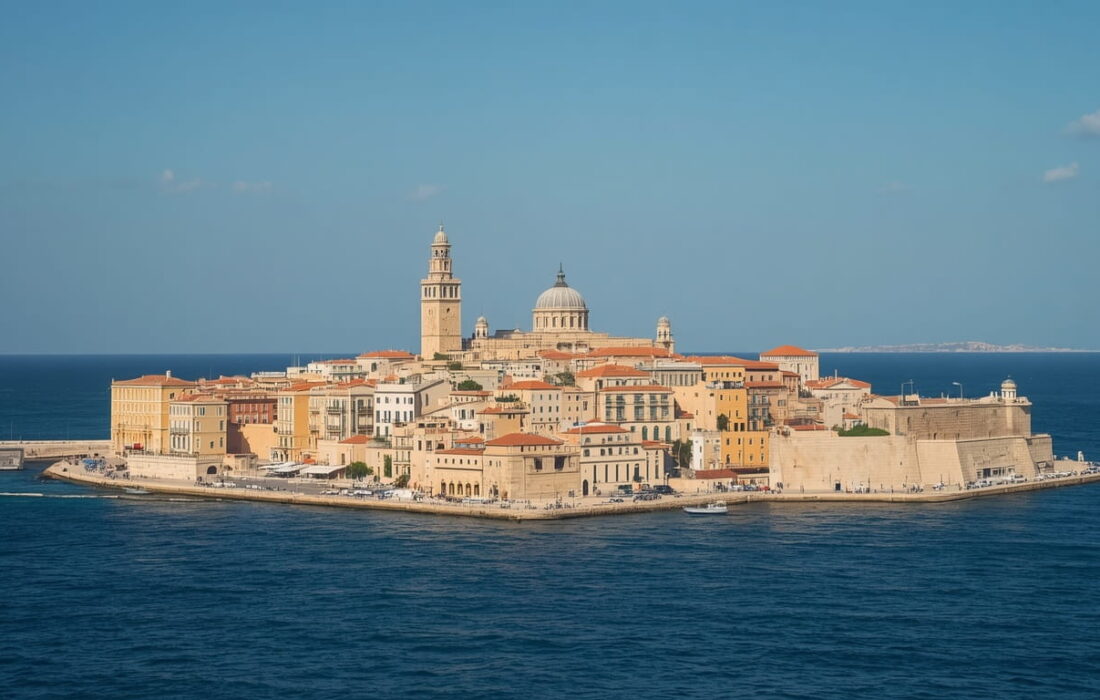
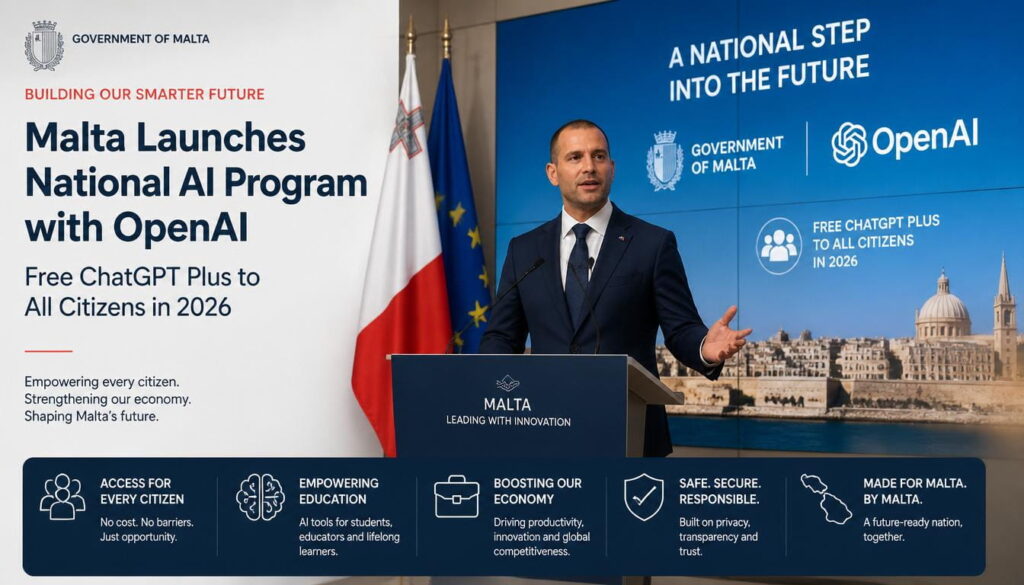
The island country of Malta has signed an agreement with OpenAI to provide all its citizens with access to ChatGPT Plus for a year, an unprecedented step that could change how countries use AI. This program, announced on May 16, 2026, is the first structured literacy program for a government to gain broad access to premium AI for its entire population.
The programme “AI for Everyone” is designed to be accessible to all, with a free online programme leading up to access to the advanced AI tool. This is to promote the responsible and effective use of the technology and ensure that its benefits are shared across society.
The Initiative Provides Details
The arrangement will enable citizens and residents who already have an online identity with the m-DIY to register for the self-paced course created by the University of Malta and the m-DIY. The course is taught without requiring any technical skills and covers AI basics, applications, and ethics. The participants will be awarded a 1-year ChatGPT Plus subscription (which may be Microsoft 365 Personal with Copilot in subsequent phases).
In May 2026, the program will start immediately and expand based on the number of participating residents. This event is expected to draw a large number of attendees, as officials have stated that it will play a key role in boosting productivity in education, business, and everyday life. Minister for Economy, Silvio Schembri, underscored its potential in an era when the economy is rapidly shifting into the age of Artificial Intelligence, benefiting families, workers and small businesses.
By investing a total of €100 million in digital transformation, Malta is emerging as a leader in the field of integrating AI. The connection between access and education helps mitigate issues related to the digital divide and abuse, encouraging learning and informed use of digital technologies rather than passive consumption.
Global Context & Significance
The rapid development of AI technologies poses a challenge for governments around the world regarding how to implement them fairly. Malta’s model is unique in that it explicitly focuses on literacy and has a national scope. The experts believe it can serve as a model for other nations to use AI to drive change without increasing disparities.
OpenAI stated that the collaboration focuses on implementing AI tools to address local priorities and align with its “countries” program. George Osborne, the program’s head, applauded the way Malta is showing countries how to engage their citizens with AI. The agreement highlights OpenAI’s growing involvement in non-commercial areas, such as public policy and national development.
Given the nation’s small size (about 500,000), the program is a substantial human capital investment. The widespread adoption of AI skills can drive innovation, help deliver better public services, and increase the competitiveness of industries such as tourism, financial services and maritime, which contribute significantly to Malta’s economy, supporters argue.
Supporters think that there are large benefits to be realised. Individual students might get personalised tutoring, workers could benefit from more streamlined processes, and public administration might seek more efficiency. AI tools can be used in the healthcare and social care sector to assist with information dissemination and provide basic advisory functions, but always with human oversight.
However, challenges remain. There will be a need to make the courses accessible to widows and those with limited computer skills. Additionally, issues of data privacy, cybersecurity, and the environmental impact of the massive application of AI must be considered. Reliance on a sole provider may be questioned by critics, and the sustainability of such a scheme may be called into question at the end of the first year.
The implementation, monitoring of usage and feedback to enhance the programme will be handled by the Malta Digital Innovation Authority. This data could be used for future planning or changes and may impact future projects in other areas.
The Malta-OpenAI collaboration comes as the world grapples with how to regulate and access AI technology. As larger economies develop roadmaps for safety and ethics, Malta has chosen a more hands-on approach to empowerment. It points to a “small nation advantage” in terms of being able to experiment quickly with the latest tools.
Successful implementation could encourage other regional and mid-sized countries to follow suit, observers say. It also indicates a shift from tension to opportunity in partnerships between AI developers and governments as these relationships mature.
Throughout the implementation process, signs of adoption, acceptance, and positive, measurable results in productivity or skill development will be monitored closely. If this success helps prove that AI education plus premium access can deliver real societal benefits, it could accelerate the mainstreaming of AI.
Conclusion
This is a bold move by Malta toward universal access to AI, reflecting a vision of inclusive digital progress. The island nation is not only investing in tools but also in people’s ability to use them wisely through a requirement for foundational learning.
The effort may be a step towards a new era in which governments actively promote AI innovation and involve the general public. As the outcomes become available in the next few months, Malta could become a benchmark for national AI policies and provide important insights for the rest of the world’s experiences with the potential and challenges of AI.