
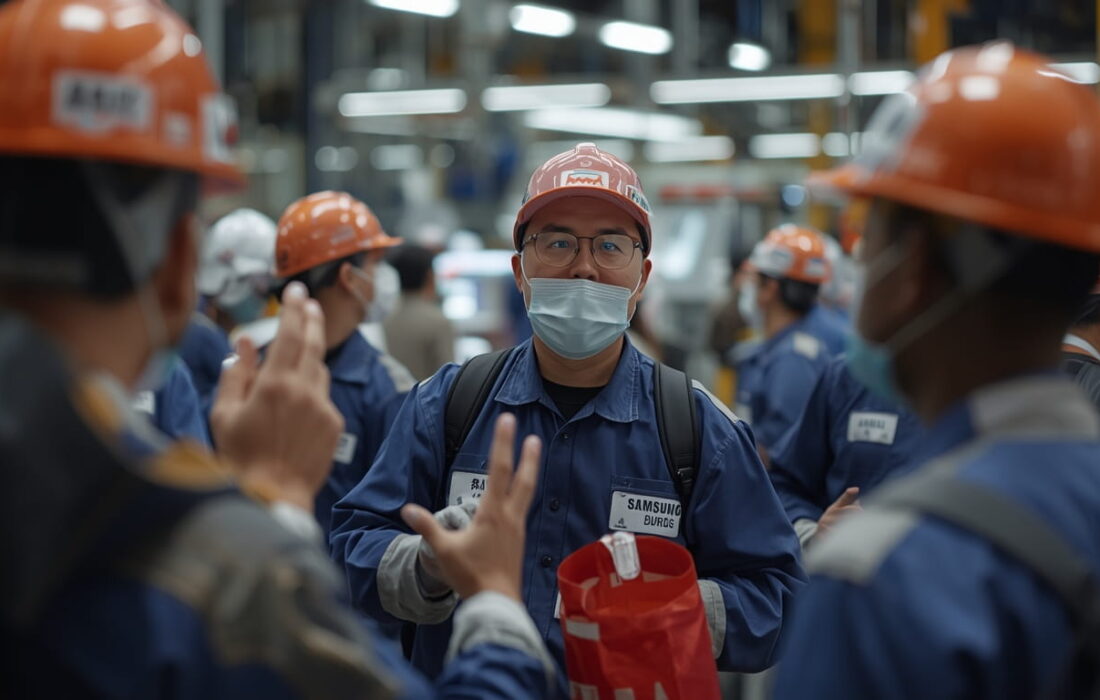
Thousands of Samsung Electronics workers are just a few days away from embarking on the largest strike in the company’s history, a development that has sent ripples around the world in the semiconductor industry. The action will start on May 21 and run for 18 days, posing a risk to the production of the critical memory chips that drive artificial intelligence systems around the world.
The controversy is about the share of the vast profits reaped by the current wave of AI. As demand for high-bandwidth memory, which powers AI data centres, surges, the world’s biggest memory chipmaker, Samsung, has seen its fortunes improve. But the windfall has highlighted significant divisions among the company’s workforce, with groups competing for fair pay.
Over 45,000 workers at the nation’s major semiconductor manufacturing plants in Pyeongtaek are preparing to strike at key factories, including major semiconductor production units. The company had offered the union weeks of bonuses, but these talks were deadlocked, and the union had rejected the latest offers. No matter how brief the shutdown, analysts estimate billions in lost production will result from it – not just for smartphones and laptops, but also for sophisticated AI infrastructure.
The Device Solutions Division of Samsung includes memory chips, system LSI, and foundry services. These units have become very different with the rise of AI, with some performing impressively while others lag behind. The production of memory chips, which are essential for training and operating large language models, has generated unprecedented profits. The foundry and logic chip unit, in contrast, has been losing money in recent years while supplying the industry with specialised AI components to large customers.
This is reflected in company proposals. In some instances, however, bonuses will exceed 600% of the worker’s annual salary for memory division jobs, compared with offers given to workers in other divisions. Union leaders say this disparity can’t continue and threatens further loss of talent. Staff members at foundry jobs who work alongside memory teams in the same factories feel undervalued, even as they play a key part in creating AI chips.
One union official referred to the “frustration” as workers make the vital “base die” components for AI processors, asking themselves why their work will result in orders-of-magnitude lower pay. Inside reports suggest that, in some instances, teams have already been trimmed as engineers leave for other companies offering better deals, such as competitor SK Hynix, which recently eliminated pay caps.
Samsung believes bonuses should be based on the division’s performance. Executives mention heavy investments, mainly from memory profits, in areas that negatively impact the bottom line, in an effort to control the entire semiconductor technology range. The company touts itself as a one-stop shop that can provide complete chip solutions, unlike more niche firms.
The strike has left South Korea’s government and the global markets feeling concerned. The finance officials call it a great threat to the country’s growth, exports, and currency stability. The potential operating damage to JPMorgan is in the tens of billions of dollars; sales losses will add to that, and more will follow if the bank faces further attacks.
Samsung is also a key player in the AI supply chain, supplying memory chips. A disruption of any length could worsen current shortages, postponing work on projects for tech companies that depend on the latest hardware. Foreign investors and trade partners keep a close watch on developments, concerned about reliability in one of the world’s most important manufacturing centres.
The episode highlights the general conflict in the tech industry. With AI sparking unparalleled prosperity, concerns are growing about how these dividends are shared amongst companies, shareholders and workers. This has even led to a discussion of how the surplus tax revenues generated in this boom should be used to give the citizens a “citizen dividend” in South Korea, though this concept has not received universal approval.
The stand-off is more than just a labour dispute to Samsung. It puts the conglomerate to the test in pursuing its lofty vision amid rapid technological change. Chairman Jay Y. Lee has had the vision for the company to become the clear leader in logic chips by 2030, but there’s now a disconnect within the company, as well as a threat of talent leakage.
Recent strikers say they lack pride in their jobs because they feel unmotivated and that their work isn’t being rewarded for the company’s success. Tens of thousands have taken to the streets in protest, and there is broad support from the workforce.
Samsung has offered industry-leading pay and is threatening to lose customers’ trust if it strikes. The talks continue, but with hard lines being drawn in last-minute negotiations, with no resolution in sight as the deadline draws nearer.
It’s a time of great importance for the world of technology. The demand for semiconductors used in AI applications continues to grow, making Samsung a key player in the semiconductor industry’s future. But a successful leader must not only be technologically capable, he or she must also have a well-organised internal structure to fairly reward all the contributions.
It’s seen as a potential sign of things to come in labour relations in the high-tech industry. If the compromise is successful, unions could learn from it and establish a positive precedent for other negotiations; if it fails, it may encourage other unions to take more aggressive action and inspire companies to reconsider their bonus plans and business-unit mergers.
Samsung’s eyes are all on it now, as the day of May 21 draws near. The resolution will shape the company’s future and the stability of supply chains that support the AI revolution. But for an industry moving towards ever-greater capabilities, a strong human component might be as important as any hardware advance.